
Solar Generators
Bundled power stations with solar panels
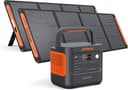
A “solar generator” is a portable power station bundled with one or more solar panels. The bundle is a packaging decision, not a different technology — which means the only question worth asking is whether the kit costs less than buying the same station and panel separately, and whether the panel it includes is the one you actually want. Our best solar generator guide ranks the six bundles listed here by how many hours of peak sun a refill takes.

How to choose
Price the bundle against its parts
Bundles are often genuinely cheaper, but not always, and the discount moves week to week. Every listing here shows the station and the panels it ships with, so you can compare against the standalone prices on this site before committing. A kit that costs more than its components usually signals a panel you would not have chosen.
Expect well under the panel's rated watts
A 200W panel rating is measured under standard test conditions — 1000W/m² at 25°C, perpendicular to the cells. Real conditions give up perhaps 20–30% to heat, haze, and imperfect angle, so a 200W panel realistically delivers 140–160W at solar noon and far less either side of it. Recharge estimates built on the rated figure will disappoint. Why solar charges slower than advertised shows the derating in detail.
Check the input ceiling
Every station caps how much solar it will accept. Bundling more panel wattage than the input ceiling allows wastes the surplus, and some kits ship close to that limit already — worth checking before you plan on adding a second panel later. The input spec also determines whether expansion means more panels or a bigger station.
The station still decides everything else
Runtime, inverter output, and lifespan come from the station, not the panel, so the sizing logic is identical to a bare unit: output rating against your largest load (surge vs running watts), then capacity against your runtime need, then chemistry for longevity (LiFePO4 vs NMC).