
Updated October 2026: the EcoFlow Delta 2 is no longer sold at Amazon (its listings now serve the Delta 3), so the Delta 3 replaces it below. Corrected the same day: the 1000Wh-class night counts on DC (previously "three to four nights") and the River 2 Pro example, which had counted inverter loss twice, now follow our runtime method.
Every watt-hour that reaches your CPAP through the AC outlet paid a toll first. On battery power, the inverter's cut is roughly 15-20% — a free runtime upgrade if you skip it. The physics is straightforward: your power station's battery stores DC power, your CPAP runs on DC power, and the AC inverter is a middleman charging for two conversions that cancel each other out. For van life battery setups and off-grid CPAP use, running your machine on 12V DC instead of routing through the inverter adds 45 minutes to an hour per night from the same battery capacity. Here's how the losses stack up, which DC cables to use, and when AC is still the better choice. (If you need your machine's draw first, how many watts does a CPAP use? has the manufacturer figures by model, and the CPAP runtime calculator has a DC mode that skips the inverter loss.)
Why the AC Path Wastes Power
The double conversion happens invisibly but the energy loss is real. Your power station's battery is DC — electrons stored at 12V, 24V, or higher depending on cell configuration. When you plug your CPAP into an AC outlet, the station's inverter converts that DC to 120V AC (or 230V in other regions), a process that runs about 85% efficient in typical pure sine wave inverters — the 0.85 factor we use throughout our runtime math. The inverter also draws 5-15W of idle overhead just to stay powered on and monitor the circuit.
Your CPAP's power brick then converts the AC back to DC — usually 12V or 24V DC — to run the motor and electronics. That second conversion adds another 10-15% loss depending on the brick's design. Two conversions, two losses, to end exactly where you started: DC powering a DC motor. The compounding toll is where the 15-20% total inverter power loss comes from.
Skipping the inverter by plugging a DC cable directly from the power station's 12V port to your CPAP eliminates both conversions. The battery's DC flows straight to the machine's motor. That 15-20% toll goes to sleep hours instead of waste heat radiating from the inverter and power brick.
How to Run a CPAP Off 12V Power Station
Three DC power paths exist, ranked from most to least recommended:
1. Manufacturer DC converter cord, plugged into the station's regulated 12V barrel port
This is the supported path. ResMed, Philips Respironics, and most major brands sell model-specific DC cables that replace the AC power brick entirely. The cable plugs into your machine's DC input and terminates in a barrel connector (typically 5.5mm × 2.5mm or 2.1mm) that matches the power station's 12V regulated port. Voltage is stable, the connection is mechanically sound, and your warranty stays intact.
Check your CPAP manufacturer's accessory catalog for the DC converter matching your exact model. Search "[brand] [model] DC cable" or "12V mobile power cord" on the manufacturer's site or authorized reseller.
2. Machine-brand DC adapter into the car-style 12V socket
Some CPAP DC cables terminate in a car cigarette-lighter plug instead of a barrel connector. These work fine plugged into the power station's car socket, with one caveat: most car-style ports are fused at 10A, limiting output to around 120W. CPAP machines without heated humidifiers draw 30-60W, well under the ceiling. Even with moderate heating, you're safe. The efficiency advantage over AC is identical.
3. Why NOT to cut, splice, or use generic "12V DC" cords
Voltage regulation matters. CPAP motors expect a narrow input range — typically 11-16V DC depending on the model. Generic cords sold as "universal 12V" often lack regulation circuits and can deliver 14V+ when the battery is full or sag below 11V as it drains. The machine may refuse to start, throw errors, or brown out mid-session even though the battery has 30% capacity left.
Splicing a cut cord to alligator clips or Anderson connectors voids your warranty and creates a fire risk if polarity is reversed or the connection shorts. Always use the manufacturer's DC cord.
Why Regulated 12V Matters for CPAP Van Life Battery Setups
Not all 12V ports are equal. Unregulated 12V outputs track the battery's state of charge: 13.6V when full, sagging to 11V or lower as the cells drain. Your CPAP may cut out before the power station's battery is actually empty, wasting usable capacity.
Regulated 12V ports hold 12V ±0.5V across the full discharge curve using a DC-DC buck converter. This is critical for sensitive electronics like CPAP motors. Most modern power stations label the port "DC 12V 10A (regulated)" or similar in the manual. If the manual doesn't specify, assume unregulated and test cautiously — or stick with the AC path.
For a deeper explanation of regulated versus unregulated outputs and port current limits, see our Power Station Port Wattage Limits guide.
When AC Is Still the Right Call
Three scenarios make the AC inverter path the better choice despite the 15-20% toll:
No DC cord exists for your machine. Older CPAP models and some budget brands don't offer a DC input or accessory cable. If your machine physically lacks a DC jack, the inverter is your only option.
You run the heated humidifier on medium or high. Some CPAP models — particularly older ResMed and Philips units — require the AC power brick to supply full wattage to the humidifier heater plate. The DC cable path may disable the humidifier entirely or limit it to low heat. Check your machine's manual or the DC cable product page for humidifier compatibility. For analysis of humidifier power draw and how it affects battery life, cross-reference our CPAP Humidifier Battery Drain guide.
Home outage backup where capacity is ample. If you're running a 1000Wh+ power station for a one-night backup and convenience trumps efficiency, plugging into AC is simpler. You skip buying a DC cord, and the 15-20% loss costs you 80-100Wh on a single eight-hour session — negligible if the station is recharged the next day. Pure sine wave output is non-negotiable for CPAP motors, but every power station in the modern market meets that standard.
Power Stations Compared: Sub-1kWh vs 1000Wh for CPAP DC Efficiency
| Spec | Anker SOLIX C1000 Gen 2 | EcoFlow River 2 Pro Solar Generator (220W) | EcoFlow DELTA 3 Portable Power Station |
|---|---|---|---|
| Capacity | 1024 Wh | 768 Wh | 1024 Wh |
| Continuous Output | 2000 W | 800 W | 1800 W |
| Surge Output | 3000 W | 1600 W | 3600 W |
| Weight | 24.9 lbs | — | 27.6 lbs |
| Battery Chemistry | LiFePO4 | LiFePO4 | LiFePO4 |
| Cycle Life | 4000 cycles | — | 4000 cycles |
| Recharge Time | 49 min | — | 56 min |
| Max Solar Input | 600 W | — | 500 W |
| Included Panel | — | 220 W | — |
| Outlets | 6 AC · 1 Car · 2 USB-A · 2 USB-C | — | — |
Sub-1kWh stations benefit most from the 15-20% DC efficiency gain, because every watt-hour counts. The smallest in-stock unit we track, the EcoFlow River 2 Pro Solar Generator (last checked $719.00 · checked Oct 19, 2026 · see on Amazon), carries 768Wh rated — roughly 650Wh usable. A 50W CPAP (motor only, no humidifier) over eight hours consumes 400Wh. On AC through the inverter, that night pulls about 470Wh out of the 768Wh battery once inverter loss is counted — over 60% of the pack on a single night. On DC, the same night pulls closer to 400Wh, which leaves a genuine reserve, which is the difference between cutting it close and sleeping on margin. (The 500Wh class below it, where DC was a hard requirement, is currently unavailable at Amazon.)
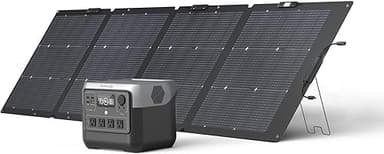
EcoFlow · RIVER 2 Pro + 220W
768 Wh · 800W output · 220W panel
The River 2 Pro pairs LiFePO4 chemistry with the lightest, most affordable footprint in our lineup, and it ships as a bundle with a 220W solar panel — meaning a humidifier-off night can be replaced by a few hours of good sun between sleeps. Its 800W pure sine output is far beyond any CPAP's needs.
The 1000Wh-class units — Anker SOLIX C1000 Gen 2 (last checked $699.99 · checked Oct 19, 2026 · see on Amazon) and EcoFlow Delta 3 (last checked $629.00 · checked Oct 19, 2026 · see on Amazon) — make DC power optional rather than essential. Both hold 1024Wh, enough for two full nights on AC with a 50W CPAP (~870Wh usable ÷ 400Wh a night), or two and a half on DC, where nearly the full 1024Wh is available before any DC-converter loss. The 15-20% savings still matter over multi-night trips, but single-night convenience often wins.
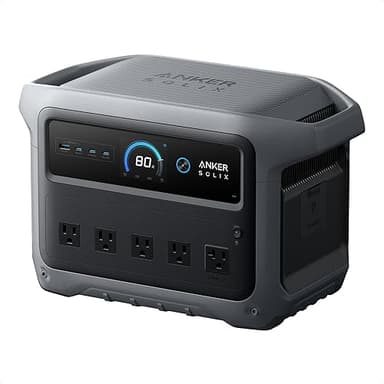
The Anker SOLIX C1000 Gen 2 leads the 1000Wh tier with 4000-cycle LiFePO4 cells and 49-minute recharge from AC. At 24.9 lbs, it's lighter than the Delta 3 by nearly 3 lbs, and its 4000-cycle rating ties the Delta 3 for the longest here.
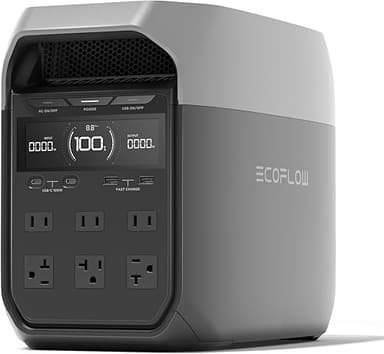
The EcoFlow Delta 3 matches 1024Wh capacity and 4000 cycles but weighs 27.6 lbs. Its 1800W inverter (3600W surge, with X-Boost for some higher-wattage resistive loads) is irrelevant for CPAP but useful if the station doubles for a portable fridge or power tools. It replaced the Delta 2, which is no longer sold at Amazon.
Bottom line: If you're running a sub-800Wh station, DC power is a practical necessity for reliable nightly CPAP use. On 1000Wh+ stations, DC is an optimization that stretches multi-night trips and reduces recharge frequency.
FAQ
Does running a CPAP on 12V really save power?
Yes, based on typical inverter efficiency ranges. Running through the AC inverter incurs two conversion losses: DC-to-AC in the power station's inverter (we plan on 85% efficiency, plus idle overhead) and a further loss in the CPAP's power brick converting back to DC. A total path loss of 15-20% is a fair planning figure; depending on the specific inverter and brick, it can run higher. Direct 12V DC from the station to the machine eliminates both conversions. On a 400Wh overnight session, that's 60-80Wh returned as usable runtime — roughly one extra hour of sleep from the same battery.
What DC cable do I need for my machine?
Contact your CPAP manufacturer or check their accessory catalog for the DC mobile power cord or 12V converter cable designed for your exact model. ResMed, Philips Respironics, and other major brands sell model-specific cables that terminate in either a barrel connector (for power station DC ports) or a car cigarette-lighter plug (for car sockets or station car-style outlets). Do not use generic "universal 12V" cords — voltage regulation and connector pinout vary by machine, and mismatched cables can damage the motor or void your warranty.
Can I use the car socket in my actual car overnight while I sleep?
Mechanically, yes — the CPAP DC cable works identically whether plugged into a power station's car socket or your vehicle's 12V port. The practical concern is battery drain. A 50W CPAP over eight hours pulls 33 amp-hours from a 12V car battery. Most automotive batteries are 50-70 amp-hours, but discharging below 50% shortens their lifespan and risks a no-start in the morning. If the vehicle is running (engine idling or in accessory mode with the alternator charging), the drain is negligible. Parked overnight with the engine off, you risk a dead battery unless the vehicle has a deep-cycle auxiliary battery or you limit runtime to three to four hours.
Is 15-20% savings worth the cost of a DC cord?
On sub-800Wh power stations, yes — the DC cord is a functional requirement, not a luxury. Without it, you lose 60-80Wh per night to inverter losses, and margin for error disappears. On 1000Wh+ stations used for single-night backup or infrequent camping, the savings is real but optional; convenience may justify staying on AC. A manufacturer DC cable is a modest one-time purchase that pays back in extended battery lifespan (fewer recharge cycles per trip) and the ability to run two or three nights from a single charge instead of one — check your machine maker's accessory list for current pricing.
Do all power stations have a 12V output?
Nearly all portable power stations include at least one 12V output, but the form factor varies. Common options: a regulated 12V barrel port (5.5mm × 2.1mm or 2.5mm center pin), a car-style cigarette-lighter socket, or both. Check the product manual for "DC 12V regulated" or similar language. Unregulated 12V ports sag in voltage as the battery drains and may cause the CPAP to cut out prematurely. If the manual doesn't specify regulation, contact the manufacturer or test cautiously with a multimeter across the discharge curve.
Does DC work with the heated humidifier?
It depends on the CPAP model. Many modern machines support heated humidifiers on DC power, but at reduced output — typically low or medium heat only. Older models and some brands require the AC power brick to supply full wattage to the humidifier heater plate; the DC cable path may disable the humidifier entirely or limit it to passover (no heat). Check your machine's manual or the DC cable product page for humidifier compatibility. If you need medium-to-high humidifier heat, the AC path may be your only option despite the 15-20% inverter loss. For detailed humidifier power draw data, see our CPAP Humidifier Battery Drain article.
Pick Your Path: When to Buy What
If you're running a sub-1kWh station for nightly CPAP use, buy the manufacturer DC cable for your machine first — before your first trip. The 15-20% efficiency gain moves a unit like the EcoFlow River 2 Pro (last checked $719.00 · checked Oct 19, 2026 · see on Amazon) from cutting-it-close to comfortable on humidified nights, and unlocks two-night trips if you skip the heated humidifier.
For 1000Wh-class stations like the Anker SOLIX C1000 Gen 2 (last checked $699.99 · checked Oct 19, 2026 · see on Amazon) or EcoFlow Delta 3 (last checked $629.00 · checked Oct 19, 2026 · see on Amazon), DC is optional but still recommended for multi-night off-grid stretches. The efficiency gain stacks over consecutive nights: two nights on AC consumes 940-1000Wh (with losses), but two nights on DC draws 800Wh, leaving 200Wh for a phone, laptop, or partial third night.
If your machine doesn't support DC input or you rely on medium-to-high heated humidification, stay on AC and size the power station accordingly — 1000Wh minimum for reliable overnight use. Every station here uses pure sine wave inverters, so motor compatibility is a non-issue. The 15-20% toll is real, but it's a known cost you can design around rather than a deal-breaker.