
A "solar generator" sounds like a distinct category of gear. It isn't. Every solar generator on the market is a portable power station bundled with one or more solar panels, sold under a single SKU at a single price. The marketing term is convenient — you search once, buy once, and everything theoretically works together out of the box. But because you're really buying two separate products wrapped in one listing, you can price-check the components individually and frequently find a better deal, a better panel, or both for the same money.
What a Solar Generator Bundle Actually Is
Strip away the branding and every solar generator kit contains exactly two things: a battery-equipped power station with AC outlets and a foldable solar panel with the matching connector. Brands like Anker, Jackery, and EcoFlow package their own stations with their own panels, assign a new model number to the pair, and list it as a complete "solar generator."
There's nothing deceptive about this — bundles do offer plug-and-play compatibility and simplified purchasing. But the kit price is not magically different from the sum of its parts. The station and panel each have standalone SKUs, standalone prices, and standalone street discounts that shift independently. That creates opportunity: sometimes the bundle genuinely saves money, and sometimes you're paying a premium for convenience you don't need.
The term "solar generator" also leans heavily on search behavior. First-time buyers search for "solar generator," not "power station plus panel," so brands optimize for that phrase. Once you understand the pieces, you can evaluate the deal on its actual components.
How to Price the Pieces: The Three-Step Check
Step 1: Identify the exact models in the bundle. Most product pages list the power station model and panel wattage. For example, the Jackery Solar Generator 1000 v2 (no recently verified in-stock offer) includes the Explorer 1000 v2 power station (last checked $499.00 · checked Oct 20, 2026 · see on Amazon) and one SolarSaga 200W panel. The Anker SOLIX C1000 Solar Generator (last checked $739.99 · checked Oct 26, 2026 · see on Amazon) pairs the C1000 Gen 2 station (last checked $499.99 · checked Oct 26, 2026 · see on Amazon) with a 200W bifacial panel.
Watch for vague descriptions — some bundles include older-generation panels or unbranded third-party units to hit a price point. If the panel model isn't explicitly named, that's a red flag.
One real-world wrinkle: the bundled panel is sometimes not sold standalone at all — as of this writing, neither the SolarSaga 200W nor the standard PS200 has a live standalone Amazon listing. When that happens, price the nearest current equivalent instead (the PS200 Bifacial (last checked $499.99 · checked Oct 19, 2026 · see on Amazon) or Bluetti PV200 (last checked $349.00 · checked Oct 19, 2026 · see on Amazon) for a 200W-class panel) — it tells you what the panel "slot" in the kit is worth on today's market.
Step 2: Price each component separately at current street price. Use live pricing links, not MSRP. Seasonal sales, Prime Day, and Black Friday can discount power stations and panels at different rates, creating spreads the bundle price doesn't reflect. Check both the manufacturer's site and major retailers — and be skeptical of advertised percentages: our six weeks of recorded price tracking through Prime Day 2026 found the average "33% off list" deal was 11% off real street price.
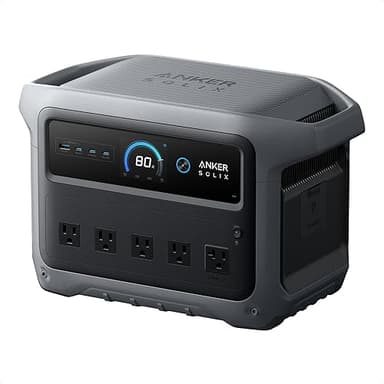
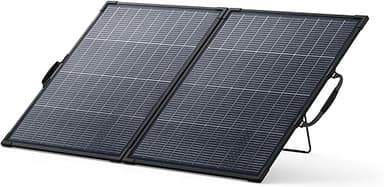
Step 3: Add the separate prices and compare. If the sum of the station and panel purchased individually is lower than the bundle, the kit is marking up convenience. If the bundle is cheaper, it's a genuine discount. The margin can swing either direction depending on current promotions, but the math is always the same.
One common pattern: brands discount power stations heavily during sales but leave panel prices static. A bundle priced weeks earlier may not reflect the new station price, leaving you paying full retail for the panel embedded in the kit.
When Bundles Win (and When Separates Do)
Bundles genuinely win in three scenarios:
- True bundle discounts. Some kits do price below the sum of the parts, especially during launch promotions or holiday sales. When the math favors the bundle, buy the bundle.
- Guaranteed compatibility. For first-time buyers unfamiliar with voltage windows, connector types, and input limits, a manufacturer-matched bundle eliminates guesswork. The cable fits, the wattage is within spec, and the warranty covers both pieces as a system.
- Simplified warranty and support. One order, one return window, one customer-service contact. If something fails, you're not triangulating between a panel brand and a station brand.
Buying separately wins when:
- You want a better panel for the same total budget. Many 1000Wh bundles include a 200W panel. For the same money, you can often buy the station alone plus a 300W or bifacial panel from another brand, cutting recharge time significantly.
- You already own a compatible panel. Any panel within the station's input voltage range and under its max wattage will work. Cross-brand pairing is common and safe — see our guide on solar generator charging slower than advertised for voltage-window details.
- The bundle includes an outdated or undersized panel. A 100W panel paired with a 1000Wh station will take ten-plus hours in full sun to recharge. Spending the bundle premium on a separate 200W or 300W panel instead makes the system far more practical.
The weakest link in most kits is the panel. Stations have converged on LiFePO4 chemistry, 1000–1500Wh capacity, and 1500–2000W output. Panels vary wildly in efficiency, portability, and build quality, yet many bundles treat them as an afterthought.
Solar Generator Kits Compared
For the full ranking of the six bundles we track — rated on the published rubric, with hours of peak sun to refill each one from its included panel — see the best solar generators guide. The table below is the pricing view.
| Spec | EcoFlow Delta 2 Solar Generator (220W) | Jackery Solar Generator 1000 v2 (200W) | Anker SOLIX C1000 Solar Generator (200W) |
|---|---|---|---|
| Capacity | 1024 Wh | 1070 Wh | 1024 Wh |
| Continuous Output | 1800 W | 1500 W | 2000 W |
| Surge Output | 2700 W | 3000 W | 3000 W |
| Weight | 27 lbs | 23.8 lbs | — |
| Battery Chemistry | LiFePO4 | LiFePO4 | LiFePO4 |
| Max Solar Input | 500 W | 400 W | — |
| Included Panel | 220 W | 200 W | 200 W |
All three bundles pair a roughly 1000Wh LiFePO4 station with a 200–220W panel. The Anker SOLIX C1000 Solar Generator (last checked $739.99 · checked Oct 26, 2026 · see on Amazon) offers 2,000W output (3,000W surge) and the fastest solo recharge time thanks to 600W max solar input on the standalone station. The Jackery Solar Generator 1000 v2 (no recently verified in-stock offer) includes a bifacial IP68 panel and a 4000-cycle battery but caps solar input at 400W. The EcoFlow Delta 2 Solar Generator (no recently verified in-stock offer) sits in the middle with 500W max solar input and 1800W output, though it is no longer sold at Amazon: its listing now serves the standalone Delta 3.
Judge each kit by its weakest component. A 220W panel on a station with 500W max input leaves 280W of headroom you're not using — you could add a second panel later, but the bundle doesn't take advantage of the station's capability out of the box. Conversely, a 200W panel on a 400W-max-input station like the Jackery is properly matched, but you can't meaningfully upgrade solar capacity without replacing the panel entirely.
The included panel is almost always the limiting factor in real-world use. Stations charge at whatever wattage the panel delivers under current conditions — cloud cover, angle, temperature all matter. A 200W panel rarely delivers 200W. If the bundle pricing forces you to accept a mediocre panel to get a good station, buying separately and choosing your own panel often yields better field performance for the same money.
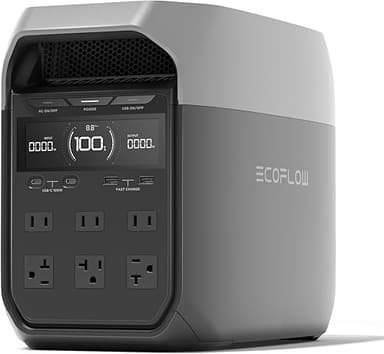
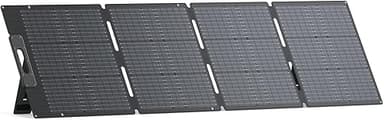
Mixing brands works. The EcoFlow Delta 3 (last checked $629.00 · checked Oct 19, 2026 · see on Amazon) accepts any panel under 500W and within its 11–60V input range. A 200W panel from another brand — the Bluetti PV200 (last checked $349.00 · checked Oct 19, 2026 · see on Amazon), for instance — operates comfortably inside that window and connects with an inexpensive, widely available adapter cable. You are not locked into same-brand pairings, and cross-brand combinations frequently outperform official bundles on price or performance.
Frequently Asked Questions
Is a solar generator different from a power station?
No. A solar generator is a marketing term for a power station bundled with a solar panel. The power station is the battery-and-inverter unit with AC outlets. The solar panel recharges it. You can buy them together as a "solar generator" kit or separately and pair them yourself. The functionality is identical.
Can I use a different brand's panel with my power station?
Yes, as long as the panel's voltage falls within the station's input range (listed in specs, typically 11–60V for most 1000Wh models) and the wattage does not exceed the station's maximum solar input. You will need an adapter cable if the connectors don't match, but cross-brand pairing is safe and common. Check our charging troubleshooting guide for voltage-window details.
Are bundles ever cheaper than buying the power station and panel separately?
Yes, especially during launch promotions, Black Friday, or Prime Day. Brands sometimes discount bundles below the sum of the individual component prices. Always price-check the station and panel separately using live pricing before assuming the bundle saves money — sales on individual components often outpace bundle discounts.
What size solar panel should I pair with a 1000Wh power station?
Match the panel wattage to the station's maximum solar input for fastest recharge. Most 1000Wh stations accept 400–600W of solar input. A 200W panel works but will take five-plus hours in ideal sun; a 400W panel cuts that in half. Bigger is better up to the input limit. Under-paneling (e.g., 100W on a 500W-max station) leaves the station idle for hours and wastes its capability.
Do solar generator bundles have one warranty or two?
Usually one combined warranty covering both the power station and the included panel for the same term, typically 12–24 months. Buying separately means two warranties from two companies. If unified support matters to you — one return, one service contact — the bundle simplifies things. If one component fails and you bought separately, you handle each claim independently.
Can I add more panels to a solar generator bundle later?
Yes, if the power station's maximum solar input exceeds the wattage of the included panel. For example, the Anker SOLIX C1000 Gen 2 (last checked $499.99 · checked Oct 26, 2026 · see on Amazon) accepts up to 600W of solar input. If your bundle included a 200W panel, you can add a second 200W or 400W panel (wired in parallel, respecting voltage limits) to speed recharge. The bundle panel does not lock you into a single-panel setup.
The Bottom Line
Do the math before you click buy. Open the bundle listing, identify the exact power station and panel models, price each separately at current street price, and compare the sum to the kit price. If the bundle is cheaper or within a few percent and you value plug-and-play simplicity, buy the bundle. If the station is on sale separately and you can pair it with a better panel for the same total, skip the kit.
Most buyers benefit from treating the power station as the primary purchase and the panel as the variable. Pick the station that matches your capacity and output needs — 1000Wh and 1500–2000W for weekend camping and home backup — then choose the best panel your budget allows, whether that's the official bundle panel or a higher-wattage third-party option. The station will outlast the panel (4000 cycles vs. 5–10 years of panel degradation), so prioritize the component you'll keep longest.
If you're new to solar power and unsure about voltage compatibility, the bundle removes risk. If you've paired panels before or you already own one, buying the station separately almost always gives you more panel for your money.